

Intelligent Energy Storage Solution for Residential and Commercial Solar Systems
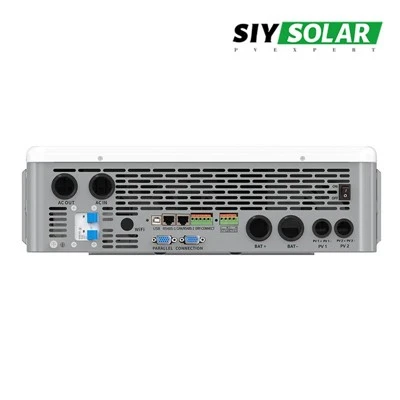
The Hybrid Solar Inverter is a next-generation energy management system that integrates solar power generation, battery storage, grid electricity, and load management into one smart solution.
Compared to traditional solar inverters, this hybrid system features advanced battery management capabilities, allowing users to store excess solar energy for peak-load shifting, backup power, or off-grid independence.
Flexible PV + Battery + Grid Energy Management
Multi-Directional Energy Control
Modern solar projects demand dynamic energy management rather than simple power conversion. The Hybrid Solar Inverter intelligently controls energy flows based on real-time conditions:
Daytime Optimization
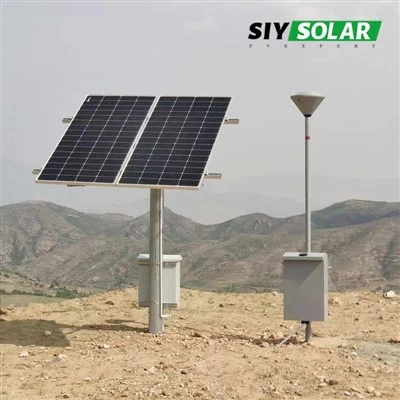
Solar energy directly powers connected loads, while excess electricity is channeled to charge the battery bank, achieving maximum self-consumption.
Nighttime & Peak Shaving
Stored battery energy is discharged during the evening or peak tariff hours to significantly reduce utility bills.
Grid Outages (UPS Mode)
In the event of a grid failure, the inverter automatically switches to backup mode within 10ms, maintaining uninterrupted power supply for essential loads (refrigerators, routers, security systems, etc.).
Tailored Product Lines & Target Applications
Single-Phase Hybrid Solar Inverter
Engineered for residential and small-scale energy storage systems.
Target Segments: Houses, villas, apartments, and small home offices.
Key Advantages: Compact and lightweight design for single-person installation; optimized for residential rooftop constraints; supports standard low-voltage battery scaling.
Three-Phase Hybrid Solar Inverter
Designed for high-capacity commercial solar and energy storage networks.
Target Segments: Commercial buildings, smart farms, warehouses, and light industrial facilities.
Key Advantages: Supports larger PV string inputs; perfectly balances three-phase electrical grids; handles heavy inductive commercial loads.
High-Voltage (HV) Hybrid Solar Inverter
Optimized for premium energy storage systems requiring elevated battery voltage configurations
Target Segments: Medium-to-large-scale commercial projects and micro-grids.
Key Advantages: Lower current transmission losses, higher system-wide efficiency, and simplified wiring.
Core Technical Advantages
Universal Lithium Battery Compatibility
Battery integration flexibility is a vital factor for project developers. Our Hybrid Solar Inverter features wide-ranging compatibility with major lithium battery brands (LiFePO₄) via standardized interfaces:
Communication Ports: CAN Bus & RS485 Interface.
Smart Matching: Adaptable to diverse battery voltage ranges, maximum continuous charge/discharge currents, and matching BMS protocols.
Intelligent Monitoring & Remote O&M
To reduce post-installation maintenance costs and truck rolls for installers, the inverter supports smart, real-time data logging via WiFi / 4G / GPRS Modules:
Cloud-Based Remote O&M Platform: Installers and end-users can remotely track Solar Yield, Battery SoC (State of Charge), Real-time Consumption, and Instant Fault Alerts.
Efficiency: Enables rapid remote diagnostics without requiring unnecessary site visits.
Uncompromised Safety & Reliability
Safety is engineered into every component to guarantee stable operation in harsh environments:
Hardware Protection: Over-Voltage, Over-Current, Short-Circuit, and Over-Temperature Protection.
Grid Safety: Integrated Anti-Islanding Protection and advanced BMS health management.
Enclosure Rating: IP65 / IP66 Weatherproof Enclosure for reliable outdoor installations.
Buyer's Guide: How to Choose the Right Model?
|
Selection Factor |
Residential (Single-Phase) |
Commercial (Three-Phase) |
Off-Grid Focus |
|
Power Range |
3kW - 8kW |
10kW- 50kW |
Depends on peak load |
|
Battery Voltage |
Low Voltage (48V) / HV |
High Voltage (200V- 800V) |
Dedicated Battery Bank |
|
Grid Interaction |
Net Metering / Feed-in |
Peak Shaving / Demand Response |
Independent Generator Input |
|
Key Priority |
Compact Design & UPS Mode |
High Efficiency & Phase Balance |
Robust Off-Grid Autonomy |
Global Compliance & B2B Supply Support
Certifications & Grid Compliance
Our hybrid inverters are engineered to comply with stringent regional grid-tie and safety regulations worldwide:
- Certifications: CE, IEC 62109-1/-2, IEC 62116, VDE-AR-N 4105, AS/NZS 4777.2 .
OEM, ODM & Customization Support
We offer scalable manufacturing capabilities and flexible cooperation models for global energy partners (EPCs, distributors, and system integrators):
- Product & Packaging Customization (OEM/ODM branding).
- Custom BMS Protocol Integration.
- Comprehensive Technical Documentation & Training Materials.
- Quality Assurance: Stringent incoming material inspection (IQC) and 100% full-load factory aging verification.
FAQ
Q: What is a Hybrid Solar Inverter?
A: A Hybrid Solar Inverter is a device that combines solar power conversion, battery charging management and grid interaction functions in one system.
Q: What is the main advantage of a hybrid inverter compared with a normal inverter?
A: The main difference is battery energy management. A hybrid inverter can store excess solar energy and use it later, while traditional inverters mainly provide immediate solar power conversion.
Q: Can Hybrid Solar Inverter work with LiFePO₄ batteries?
A: Yes. Compatible lithium battery systems can be connected through communication protocols such as CAN or RS485.
Q: Can the inverter provide backup power during a blackout?
A: Yes. When connected with batteries, the inverter can supply power to selected backup loads during grid failures.
Q: How do I select the correct inverter size?
A: Selection depends on:
Solar PV capacity
Load requirements
Battery capacity
Backup power requirements
Local grid conditions
Q: Is a hybrid inverter suitable for commercial applications?
A: Yes. Three-phase and higher-power hybrid inverters are suitable for commercial buildings, farms and small industrial energy storage projects.
Q: Does the hybrid inverter support remote monitoring?
A: Yes. Monitoring options may include WiFi, RS485, CAN communication and online monitoring systems.
Q: Can manufacturers provide OEM and bulk purchasing support?
A: Yes. Manufacturers can support distributors and project partners with customized solutions, technical documents and bulk supply services.
Hot Tags: hybrid solar inverter, China hybrid solar inverter factory, 1000w portable solar generator, Residential Microgrid Off Grid Solar System, solar panel bracket, solar panel brackets for metal roof, solar panel roof rack mounting kit, Three Phase Residential Hybrid Solar System