





Family Energy Solution
Create a practical home energy system that combines rooftop solar generation, intelligent power conversion and scalable battery storage. SIY SOLAR supports homeowners, distributors and installers with project-based configuration, OEM/ODM options and model-specific technical documentation.
Sustainable Power For Modern Homes
Turn Available Sunlight Into Useful Household Energy
Plan solar modules, an inverter, battery storage and monitoring as one coordinated system rather than purchasing isolated components.
Residential Energy Priorities
A Family Solution Designed Around Everyday Electricity Use
A responsible recommendation starts with household consumption, essential appliances, available installation space, local sunlight, service voltage and desired backup duration.
Use More Solar At Home
Direct available solar electricity to household loads and store selected surplus energy for later use.
Plan Essential Backup
Identify refrigerators, lighting, communication, pumps and other essential circuits before selecting capacity.
Control Energy Sources
Coordinate compatible solar, utility and optional generator inputs through the hybrid inverter.
Monitor System Operation
Review production, consumption, battery status and available alarms through supported communication functions.
One Connected Path From The Roof To Household Appliances
Follow the complete residential energy journey from sunlight collection to household use, battery charging and system monitoring.
 Complete Residential Energy Ecosystem
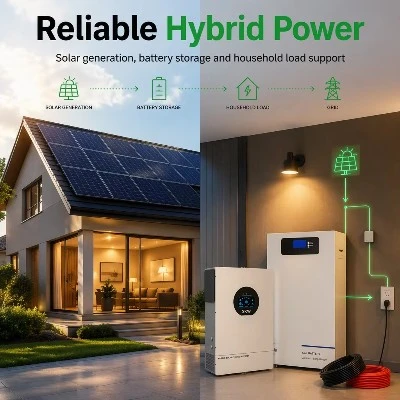
The hybrid inverter coordinates compatible solar, utility, battery and optional generator sources according to household demand and the approved operating strategy.
Your Home At The Center Of Every Energy Decision
Solar Collection
Roof, garage, carport or ground-mounted modules convert available sunlight into DC electricity.
Power Conversion
The inverter converts compatible energy and coordinates the permitted system power paths.
Home Consumption
Available energy supplies active appliances and selected household distribution circuits.
Battery Charging
Selected surplus energy charges the compatible battery within its voltage and current limits.
Smart Monitoring
Supported communication functions report production, consumption, battery status and alarms.
DAY
SAVE
NIGHT
Conceptual presentation only. Final topology, backup circuits, switching, protection, ratings and communication equipment depend on the selected product documents and local electrical requirements.
Flexible Solar And Storage For Different Home Environments
Roof type, load pattern, installation area and energy objective influence the final equipment selection.
Whole-Home Solar Planning
Coordinate daytime household loads, battery charging and selected backup circuits.
Additional Solar Surfaces
Use suitable garage or carport structures when roof space is limited.
Compact Energy Projects
Match compact module layouts and inverter limits to the available area.
Weak-Grid And Off-Grid Homes
Balance solar generation, storage autonomy and generator support.
Remote Monitoring
Review supported system information for a second home or remote property.
Solar-Ready Home Design
Coordinate roof area, equipment position, cable routes and essential loads.
Start With Household Loads - Not A Generic Package Name
These ranges organize early discussions and do not represent universal recommendations or guaranteed backup durations.
Three Product Layers Working As One Family Solution
The solar modules, inverter and battery must be selected as one compatible architecture. Category specifications do not replace exact model datasheets.
 Solar Generation Equipment
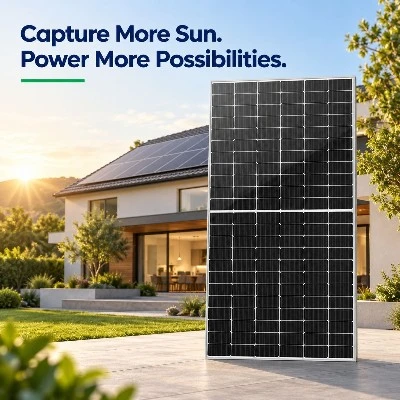
Tier 1 Solar Panel Options
Choose the module according to roof dimensions, mounting method, string design, climate and inverter compatibility. Options include monocrystalline, flexible, double-glass, bifacial, PERC, TOPCon, HJT and IBC families.
 Power Conversion Equipment
Residential Solar Inverter
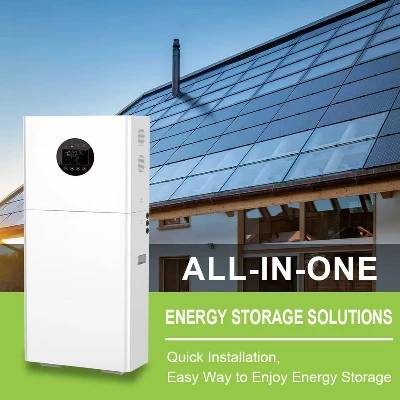
The inverter coordinates solar, battery, utility and optional generator connections. Selection depends on service voltage, phase arrangement, household loads, motor starting, PV limits and battery voltage.
 Residential Battery Equipment
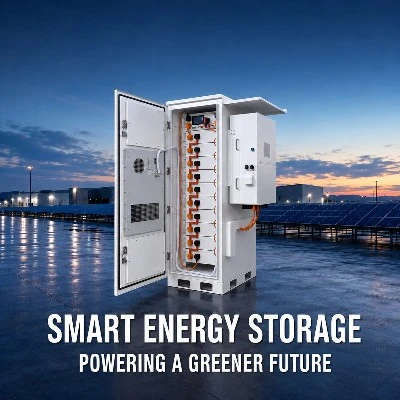
Lithium-Ion And LiFePO4 Battery
Battery selection should be based on required output, usable capacity, desired duration, reserve strategy, environmental conditions and inverter compatibility.
Efficiency, cycle life, warranty and certification statements apply only when confirmed in the selected model documents.
Compare The Complete Home Energy Architecture
Use these categories to organize an inquiry and verify compatibility before ordering.
| Decision Area | Supplied Option Range | Project Check |
|---|---|---|
| Solar modules | 10-750 W and multiple construction families. | Roof area, dimensions, string voltage, mounting and climate. |
| Inverter power | 1, 3, 5, 7, 10 and 20 kW examples. | Continuous load, peak load, voltage and phase arrangement. |
| Battery capacity | 1-100 kWh listed examples. | Usable energy, output, reserve level and backup duration. |
| Communication | Wi-Fi, 4G, RS485, CAN, GPRS, LAN and Bluetooth. | Compatibility between inverter, BMS and monitoring platform. |
| Power sources | Solar PV, utility grid and optional generator. | Supported topology, switching method and generator requirements. |
| Documentation | Certifications and warranties vary by model. | Review exact datasheets, warranty terms and certificates. |
Prepare A More Accurate Family Energy Proposal
Electricity Consumption
Provide utility bills, average daily use and seasonal changes.
Essential Appliances
List refrigerators, lighting, pumps and required backup loads.
Installation Surface
Share roof, garage, carport, balcony or ground dimensions.
Electrical Service
Confirm voltage, phase, main service and existing equipment.
Energy Objective
Separate solar self-use, backup and off-grid objectives.
Project Location
Identify country, city, climate and grid conditions.
Make Every Recommendation Traceable
Final claims should be supported by exact model documents rather than broad category descriptions.
Verify The Selected Products
Efficiency, warranty, cycle life, certification and communication functions can differ between product variants and destination markets.
- Exact module, inverter and battery model numbers
- Electrical datasheets and compatibility calculations
- Single-line diagram and operating modes
- Dimensions, weights and environmental ratings
- Protection, grounding and transfer requirements
- Applicable certificates and warranty terms
- Installation and commissioning responsibilities
Questions To Settle Before Selecting Equipment
How Much Battery Capacity Does A Home Need?
Capacity depends on essential loads, operating hours, usable energy, inverter output and reserve strategy.
Can The System Power The Whole Home?
The load profile, inverter rating, motor starting requirements and battery output must first be evaluated.
Can It Work Without The Utility Grid?
An off-grid system requires sufficient solar generation, storage autonomy and compatible controls.
Can A Generator Be Added?
Only when the selected inverter supports the intended generator connection and operating logic.
What Determines The Installed Price?
Equipment, capacity, roof work, wiring, protection, permits, labor and commissioning influence cost.
What Should The Quotation Include?
Confirm models, quantities, accessories, freight, installation, warranty terms and exclusions.
Discuss Your Family Energy Solution
Send the home location, electricity bills, service voltage, essential appliances, installation area, backup objective and existing equipment information.
- Residential load-based system planning
- Solar module, inverter and battery coordination
- Grid-connected, backup and off-grid concepts
- OEM/ODM discussion for qualified requirements
- Final ratings confirmed by selected model documents