





Residential solar + battery
Home Energy Storage Designed Around Your Loads
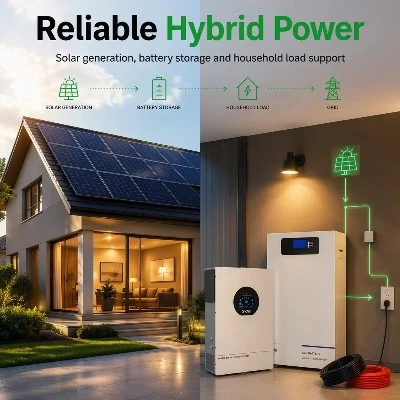
Build a practical home backup and solar self-consumption solution with matched LiFePO4 batteries, hybrid inverters and system support from SIY SOLAR. We help installers, distributors and project buyers compare configurations for new solar systems or retrofit projects.

Common applications
Store Solar Power and Use It When It Matters
The right system configuration depends on your loads, local grid conditions, solar array and required backup time.
Backup Power
Support selected household loads when the utility grid is unavailable.
Solar Self-Consumption
Store surplus daytime PV generation for use in the evening or at night.
Time-of-Use Management
Shift part of your electricity use away from higher-price periods where tariffs allow.
Off-Grid Supply
Combine PV, battery storage and an inverter for locations with limited grid access.
Product portfolio
Choose the Installation Format That Fits the Project
Compare wall-mounted, rack-mounted, floor-standing and integrated systems for different capacity, space and installation requirements.

Wall-Mounted Battery
51.2V · 5.12 / 10.24kWh
A compact format for residential backup and solar self-consumption projects where wall space is available.
View wall-mounted battery →
Rack-Mounted Battery
51.2V · approximately 5–16kWh
A modular cabinet or rack format for installers who need organized battery integration and capacity choices.
View rack-mounted battery →
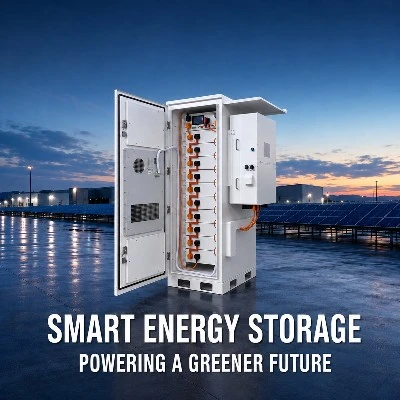
Floor-Standing Battery
51.2V · 10.24 / 16.08 / 30.72kWh
Higher-capacity floor-standing options for homes and residential projects with longer backup-time requirements.
View storage batteries →
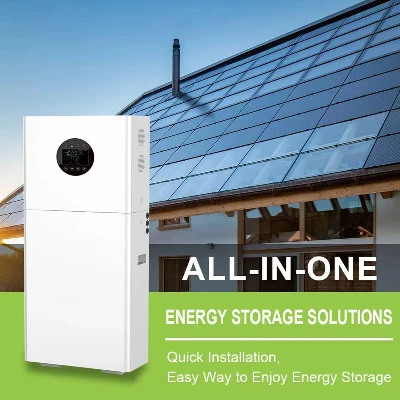
All-in-One Energy Storage System
3.6–12kW · 5–32kWh
Matched inverter and battery combinations that simplify residential system selection and installation planning.
View all-in-one systems →Representative configurations
A Starting Point for System Selection
Use these combinations as a preliminary reference. SIY SOLAR will match the final configuration to the electrical standard, PV array, loads and backup objective.
| Representative system | Electrical platform | Key design point | Typical project fit |
|---|---|---|---|
| 3.6kW + 5 / 8kWh | 120/240V split phase | Compact all-in-one system with backup switching and integrated monitoring options | Essential household loads and smaller residential PV projects |
| 6–6.2kW class + 10–16kWh | 220–240V or 120/240V, depending on model | More inverter output and storage for broader household load coverage | Medium residential backup and solar self-consumption |
| 7.2kW + 16kWh | 120/240V split phase | Dual-MPPT platform for flexible PV array design | US-market homes with larger PV and backup requirements |
| 12kW + 32kWh | 120/240V split phase | Higher-power dual-MPPT configuration with expanded storage | Larger homes and projects with higher power or longer backup needs |
Configuration note: PV input limits, MPPT ranges, charging and discharging current, communication interfaces, IP rating, usable energy, cycle-life conditions, warranty and certification documents vary by model. Confirm all final parameters in the selected datasheet and order documents.
Project matching
From Load Information to a Workable Configuration
A useful quotation starts with the project conditions, not only a target battery size.
Share Project Details
Send the country, electrical standard, critical loads, PV information and required backup time.
Match the System
We compare inverter power, battery energy, installation format and required communication interfaces.
Confirm the Proposal
Review the selected model, configuration, documentation, commercial terms and delivery requirements.
- Project country and destination
- Single-phase, split-phase or three-phase supply
- Voltage and frequency
- Critical-load power and starting surge
- Required backup time
- Existing or planned PV array size
- Indoor or protected installation space
- Quantity, delivery target and OEM requirements
Frequently asked questions
Home Energy Storage FAQ
Inverter power is mainly determined by the loads that may run at the same time and their starting surge. Battery capacity is mainly determined by load energy consumption, required backup time, allowable depth of discharge and expected solar charging.
Can the system be used with an existing solar installation?Retrofit options depend on the existing inverter, PV array, grid connection and local electrical rules. Send the current equipment model and system diagram so we can evaluate compatibility before quotation.
Can battery capacity be expanded later?Some models support parallel expansion, but the permitted battery quantity, BMS communication and matching rules are model-specific. Expansion should be confirmed during system design.
Are warranty, cycle life and certifications the same for every model?No. These items vary by battery, inverter and all-in-one system model, as well as by test conditions and destination market. We will confirm the applicable datasheet, warranty terms and available documentation for the quoted model.
What information is needed for a quotation?Please provide the project location, electrical standard, load list, PV capacity, backup-time target, quantity and delivery destination. Photos or a single-line diagram are also helpful for retrofit projects.
Request a home storage solution
Tell Us About Your Project
Share your location, electrical standard, load requirements, target storage capacity and expected delivery time. Our team will review the information and help you compare suitable options.