





Commercial PV Project Notes
Adding a Battery to Factory Solar: Should It Connect on the AC or DC Side?
The factory's rooftop PV system has been running for three years. Now the operations team wants to add a battery to reduce the afternoon peak. The PV inverters are working, the utility approval is in place, and nobody wants to replace equipment unless there is a clear reason. This is the sort of project where AC coupling often enters the discussion first-but the single-line diagram, not the label, should settle it.

PV and battery equipment can connect on different sides of the power-conversion path; the chosen layout must match the site design.
A retrofit example: keep the existing PV inverters?
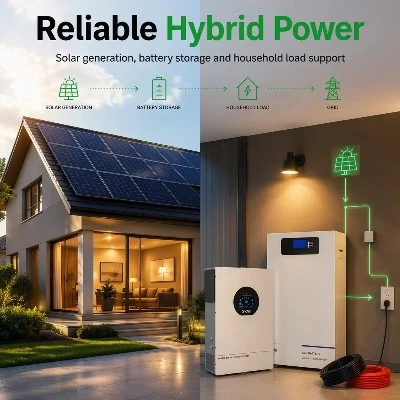
Imagine an existing 500 kW rooftop array connected through its own grid-tied inverters. The proposed battery has a separate 250 kW power-conversion system. In an AC-coupled layout, both systems connect to the site's AC network. That can let the PV equipment stay in service while the battery PCS is added as a separate block.
But "separate block" does not mean "plug and play." The project engineer still needs to check the switchboard, transformer, protection settings, meter locations, export limit and utility approval. If the PV and battery can both export at once, the point-of-connection limit may be exceeded unless the controls coordinate them. If the site operates in backup mode, the islanding and transfer design must be addressed separately.
NREL notes that AC coupling is commonly considered for retrofits because it can avoid replacing existing PV inverters. The benchmark is a useful reference, but it does not decide an individual site's interconnection or cost outcome.
When PV and storage are designed together
For a new factory project, the designer can choose the PV inverter, battery PCS and controls as one package. A DC-coupled arrangement connects the PV array and battery on the DC side before conversion to AC. In some designs, that can reduce conversion steps for solar energy stored in the battery or capture PV that would otherwise be clipped by an inverter limit.
That advantage depends on the equipment and operating profile. If the battery mostly charges from the grid at night, the DC path may bring little benefit for that energy. If the site frequently has excess PV at midday, the ability to route that energy into storage may be more relevant. The proposal should show those flows rather than simply state that DC coupling is more efficient.
Follow one unit of energy through the drawing
Ask the supplier to trace a representative operating period on the single-line diagram. When the panels produce more than the factory is using, where does the surplus go? Can it charge the battery? If the battery is full, can the system export, or must PV be curtailed? Later, when the factory load rises, which inverter supplies the AC bus, and what limits the battery's output?
Those questions expose differences that a block diagram can hide. They also make the efficiency estimate easier to interpret: ask whether it covers the PV inverter, battery PCS, battery, cooling and other auxiliary loads, and whether the figure applies to AC energy delivered back to the facility.
The decision usually comes down to the project boundary
For the retrofit, check what can remain untouched and what must be changed: PV inverters, switchgear, transformer, metering and interconnection agreement. For a new build, compare the complete equipment package and its expected energy path under the facility's actual tariff and load profile. In either case, include future expansion and the operator's ability to service the system.
A useful proposal will include a project-specific single-line diagram, power-flow explanation, export-control logic, protection scheme and efficiency assumptions. If backup operation is part of the brief, it should show the circuits and equipment needed to form and maintain an island; the coupling choice alone does not provide outage power.
So the practical answer is conditional: AC coupling is often a sensible starting point when adding storage to a healthy existing PV plant, while DC coupling deserves a close look when PV and battery are being designed together. The better option is the one that meets the grid interface, operating goal and site constraints without replacing or adding equipment the project does not need.
For context, see NREL's U.S. Solar Photovoltaic System and Energy Storage Cost Benchmark and SIY Solar's commercial storage configurations.