





Solar system guide · SIY Solar
Hybrid vs. Off-Grid Solar Systems: Which Design Fits Your Project?
Choosing between a hybrid solar system and an off-grid solar system comes down to one practical question: can the site depend on the utility grid, or must it supply its own power at all times? A hybrid system can coordinate solar, batteries and grid electricity. An off-grid system has no utility connection and must be sized around the site's loads, local sunlight and required battery reserve.

An off-grid inverter is part of a system that must balance generation, storage and the site's electricity demand.
Quick answer: Choose a hybrid system when the grid is available and you want solar self-consumption, battery storage and-if supported-backup power. Consider an off-grid system when utility power is unavailable, unreliable or too costly to extend. Off-grid projects need careful energy budgeting because there is no grid to cover a shortfall.
What is a hybrid solar system?
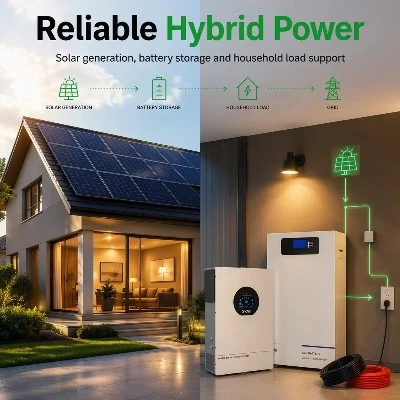
A hybrid solar system connects solar panels and battery storage with the utility grid through compatible power electronics. Depending on the inverter and system configuration, solar electricity may serve loads first, charge the battery, or export excess energy. The grid can supply power when solar generation and stored energy are insufficient.
Some hybrid systems provide backup power during an outage, but this is not automatic. The inverter must support backup operation, the wiring must separate backed-up circuits as required, and the battery must have enough usable energy for the intended loads. Buyers should confirm continuous output, surge capability, transfer behavior and supported operating modes in the product documentation.
What is an off-grid solar system?
An off-grid solar system operates without a utility connection. A typical design includes PV modules, a charge controller or inverter/charger, battery storage, distribution and protection equipment, and the loads. A generator may be added where the site needs another source during prolonged low-solar periods or unusually high demand.
Because there is no grid to fill an energy gap, sizing is central to system reliability. Designers need to understand daily consumption, peak power, motor-starting surges, seasonal sunlight, shading, temperature and the number of low-sun days the system is expected to ride through. The battery reserve and any generator strategy should match the site's actual operating priorities.
System architecture matters: the inverter, battery, PV array and loads must be selected as a compatible set.
Hybrid vs. off-grid at a glance
| Project factor | Hybrid solar | Off-grid solar |
|---|---|---|
| Utility connection | Connected to the grid; operating modes depend on inverter and local rules | Independent of the utility grid |
| Role of batteries | Store solar energy and may provide backup if configured | Core energy reserve for periods without sufficient solar |
| Energy shortfall | Grid may supply loads when permitted and available | Must be addressed through more generation/storage, load management or a generator |
| Design emphasis | Self-consumption, export limits, backup circuits and tariff structure | Load profile, solar resource, autonomy and seasonal reliability |
| Typical application | Homes, businesses and sites with grid access seeking storage or backup | Remote properties, telecom sites, farms and facilities without practical grid access |
How to decide: start with the site, not the product label
1. Check whether grid power is genuinely available
For a grid-connected site, compare the cost and reliability of the existing connection with the benefits of an off-grid design. A hybrid system can make use of the grid while adding solar and storage, subject to the utility's interconnection requirements. For a remote site, estimate the cost of extending the grid against the lifetime cost of an independent system, including batteries, maintenance and any generator fuel.
2. List the loads that must stay on
Separate essential loads from discretionary ones. Record each device's rated power, operating hours, daily energy use and starting surge if applicable. A camera and communications modem have a different duty profile from a pump, refrigeration unit or air conditioner. For a hybrid backup system, decide which circuits need to operate during an outage. For off-grid applications, identify which loads can be scheduled or reduced when energy is limited.
3. Set a realistic backup or autonomy target
"Backup time" is not a single standard. State the loads to be supplied and the duration they must run. For grid-connected projects, the target may be a few critical circuits during an outage. For off-grid systems, it may be a defined number of low-sun days. The required battery capacity depends on usable depth of discharge, conversion losses, temperature, battery chemistry and the load profile; nominal amp-hour figures alone are not enough to compare systems.
4. Review seasonal solar conditions
Use the project location, panel orientation, tilt, shading and seasonal weather when estimating PV output. A system that covers demand in a sunny month may not meet the same load during the least sunny part of the year. Off-grid designs are especially sensitive to this difference because the grid cannot make up the shortfall. A qualified designer should state the assumptions behind the expected energy yield and backup performance.
5. Confirm inverter and battery compatibility
Ask for the supported battery list, voltage window, charge and discharge current limits, communications protocol and firmware requirements. Verify whether the inverter can start the expected loads and whether its output is sufficient for simultaneous operation. If the system uses a generator, confirm how it connects, when it starts and how it charges the battery.

onitoring helps operators review system status; confirm which data and remote controls are available on the selected model.
Cost comparison: compare complete systems
A hybrid quote may include PV modules, a hybrid inverter, batteries, backup switching, protection devices, installation and grid-interconnection work. An off-grid quote may include those core components plus a larger battery reserve, additional PV capacity, a generator, fuel storage or remote monitoring. The exact list depends on the application, so headline inverter prices are not an apples-to-apples comparison.
Request an itemized proposal that identifies equipment models, usable battery capacity, inverter output, installation scope, commissioning, warranty coverage and exclusions. For off-grid proposals, ask the supplier to show the load assumptions and the design's expected performance in the least favorable season. For hybrid proposals, ask what remains powered when the grid is down and whether export limits or utility approvals affect operation.
Common mistakes to avoid
- Assuming every hybrid inverter provides backup. Confirm backup mode, circuits, transfer equipment and battery requirements.
- Sizing storage only by nominal capacity. Compare usable energy and discharge limits under the expected conditions.
- Ignoring peak and surge loads. Pumps, compressors and other motors may need substantially more starting power than their normal running demand.
- Using annual averages for an off-grid design. Seasonal resource and extended cloudy periods can determine system size.
- Leaving out service and replacement planning. Include access, monitoring, warranty response and the expected replacement process for batteries and other components.
Which system is right for different applications?
A home with a dependable grid connection may favor a hybrid design when the owner wants to use more solar energy on site, add battery storage or maintain selected loads during outages. Local tariffs, export rules and backup needs affect the economics.
A remote cabin, farm or communications site may need an off-grid system if connecting to the utility is impractical. The design should account for unattended operation, weather exposure, remote status checks and a backup plan for extended low-solar periods.
A business with critical loads should first define what must remain operational and for how long. A hybrid system may support selected loads where the grid is present; a remote facility may require off-grid architecture. In either case, the proposal should reflect load measurements and the consequences of downtime.
Frequently asked questions
Can a hybrid solar system operate without batteries?
Some hybrid inverters can operate in configurations without a battery, but features and behavior vary by model. Confirm the manufacturer's supported modes and whether battery backup is needed for the functions you require.
Can an off-grid solar system use a generator?
Yes, some off-grid designs include a generator as a secondary source. The system designer should confirm generator compatibility, charging control, transfer arrangements and operating procedures.
Is off-grid solar suitable for a whole house?
It can be, if the system is designed for the home's energy use, peak demand and seasonal solar conditions. High-demand loads may require larger generation and storage or a managed load plan.
Can I convert an existing grid-tied system to hybrid?
Possibly. The existing inverter, PV array, wiring, battery compatibility, local regulations and backup requirements all affect whether a retrofit is practical. Have an installer review the equipment and site before selecting a conversion path.
Bottom line
A hybrid solar system works alongside the utility grid and can add storage or backup when the equipment is designed for those functions. An off-grid solar system is independent and must be sized to meet demand without utility support. The best choice follows from grid access, load priorities, local solar conditions, autonomy requirements and lifetime project cost.
Before requesting a quote, prepare the project location, load list, operating schedule, backup target and installation conditions. That gives suppliers enough context to recommend a system architecture instead of simply matching a product category.
Explore SIY Solar's off-grid solar systems, commercial solar systems and energy storage batteries.
Discuss your solar project
Share your location, grid status, load requirements, storage target and intended application with the SIY Solar team.
WhatsApp: +86 180 5335 1652
Email: info@siysolar.com
Request a quote from SIY Solar
System behavior and available features vary by product model, installation and local regulations. Confirm specifications with the manufacturer and a qualified installer.