





Lithium Battery and Solar Inverter Compatibility: 7 Checks Before You Buy
A practical guide for homeowners, installers, distributors and EPC teams comparing solar battery storage systems.

A solar-plus-storage system depends on coordinated ratings and control signals across the battery, inverter and other components. Confirm the exact model combination before ordering.
Quick answer
A lithium battery is compatible with a solar inverter only when the electrical limits, battery chemistry, BMS communication and control settings are supported by the exact models on both sides. Matching a nominal voltage or seeing the same CAN/RS485 port is not enough. Before purchase, verify the approved model list or obtain written confirmation from both manufacturers.
- Check the battery voltage range
- Confirm chemistry and charge profile
- Verify BMS communications
- Match current, power and capacity
- Confirm system architecture
- Check firmware, warranty and documentation
- Supplier checklist
1. Check the battery voltage range
Start with the inverter's supported battery voltage window, not just the battery's nominal voltage. A "48 V" battery is a nominal class; its actual voltage changes during charging and discharging. The full operating range must stay within the inverter's permitted range at every state of charge.
For a project using several battery modules, also confirm how they can be connected. Series and parallel arrangements change voltage or capacity and may be limited by the battery manufacturer. Never assume that adding modules is automatically supported.
2. Confirm the chemistry and charge profile
Identify the exact battery chemistry and model. Lithium iron phosphate (LiFePO₄) batteries require charge and discharge settings appropriate to that product. The inverter must support the battery's recommended voltage limits, temperature protections and operating profile. Do not substitute generic values for the battery maker's specifications.
Some inverters offer a user-defined battery mode; that does not automatically mean they support every lithium battery. Ask which settings are configurable, whether BMS control remains active, and which protections are enforced if communication is interrupted.

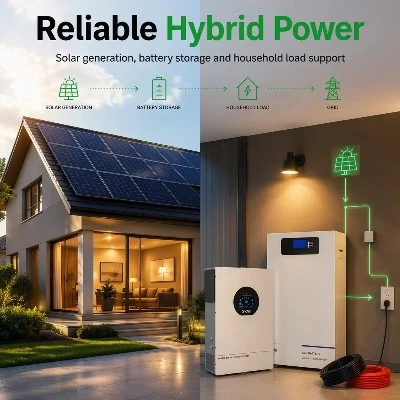
Example system layout supplied in SIY Solar product materials. Actual wiring, protective devices and connection sequence must follow the manuals and local electrical code for the selected models.
3. Verify BMS communications, protocol and pinout
The battery management system (BMS) monitors cell conditions and can communicate charge or discharge limits to an inverter. Confirm all of the following:
- The inverter model appears on the battery manufacturer's approved compatibility list, or the combination has written approval.
- The required protocol is supported (for example, a model-specific CAN or RS485 profile).
- The communication cable pinout and port assignment match the manuals. Identical connector shapes can use different pinouts.
- The inverter can read the battery status and obey the BMS charge/discharge limits.
- There is a documented fallback behavior if communication is lost.
A communication port label alone does not confirm an interoperable link. A practical commissioning check should confirm that the inverter identifies the battery correctly and that BMS limits are visible in its settings or monitoring interface.
4. Match continuous current, peak power and usable capacity
Check the battery's maximum continuous charge and discharge current against the inverter's requirements and the intended loads. Also distinguish continuous power from short-duration peak power. A battery may have enough stored energy (kWh) but still be unable to supply the inverter's required power (kW) or a motor's startup surge.
For multiple batteries, check the manufacturer's rules for parallel operation, maximum module count, cable arrangement and current sharing. Confirm usable energy rather than relying only on nominal capacity; reserve settings and operating limits can reduce the energy available to loads.
| What to compare | Where to find it | Why it matters |
|---|---|---|
| Nominal and operating voltage | Battery and inverter datasheets | Ensures the full battery range sits within inverter limits. |
| Charge/discharge current and power | Battery manual; inverter rating plate | Prevents overloading and helps size loads and battery modules. |
| Communication protocol/profile | Approved compatibility list and manuals | Lets the inverter follow BMS limits and status. |
| Usable energy and reserve settings | Battery specification; inverter configuration | Sets realistic backup duration and energy available. |
| Operating temperature and installation conditions | Product manuals | Impacts safe operation, available power and warranty coverage. |
5. Confirm the system architecture and intended use
Establish whether the system is off-grid, grid-tied with storage, or hybrid, and whether backup is required during a grid outage. The inverter must support the intended operating mode, transfer behavior, battery charging sources and backup output. A grid-tied inverter that lacks backup capability will not necessarily power loads when the grid fails.
For backup applications, list the essential loads and their starting currents, then confirm which circuits the inverter can supply and for how long. The battery, inverter, protection devices, wiring and transfer equipment should be designed as a coordinated system. Final installation should be reviewed by a qualified professional under applicable local requirements.
6. Check firmware, warranty and documentation
Compatibility can depend on inverter firmware, battery BMS firmware or a specific setup procedure. Ask whether updates are required before commissioning and who is responsible for providing them. Confirm that the proposed combination preserves the warranties of both products, including any requirements for approved installers, temperature limits, commissioning records or monitoring.
Request the current datasheets, installation manuals, approved battery list, communication cable details and warranty terms for the exact model numbers in the quotation. Keep those documents with the project handover pack.

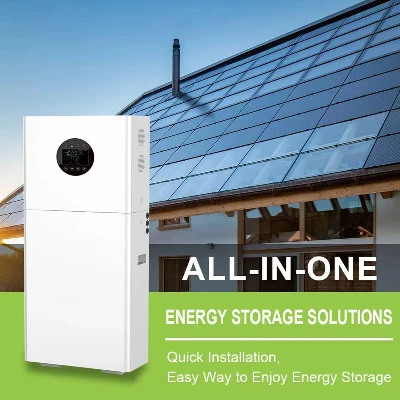
Product image from SIY Solar's supplied materials. Inverter features and compatibility vary by model; verify the relevant datasheet for the selected configuration.
7. Send the supplier a complete compatibility checklist
To get a useful answer before placing an order, provide:
- Exact inverter and battery model numbers and current datasheets.
- Target country, grid voltage and frequency.
- Battery nominal voltage, module capacity and planned number of units.
- Required continuous and surge load, plus desired backup duration.
- Whether PV, grid or generator charging is required.
- Expected ambient temperature and installation location.
- Written confirmation of the supported BMS protocol, cable/pinout, firmware and warranty conditions.
Ask for the confirmed battery/inverter combination to be listed in the quotation or system bill of materials. This makes it easier for the installer, buyer and supplier to work from the same configuration.
Frequently asked questions
Can any lithium battery work with any solar inverter?
No. Voltage range, chemistry, charge/discharge limits, BMS protocol and firmware support all need to match the specific models. Check current compatibility documentation before connecting equipment.
Is CAN or RS485 enough to prove compatibility?
No. These describe communication interfaces or protocols, but supported profiles, pinouts and firmware still vary. Confirm the complete communication setup with the manufacturers.
Should I size the battery by kWh or kW?
Both matter. kWh describes stored energy; kW describes the rate at which the system can deliver or accept power. Choose around both the loads and the required backup duration.
Need help checking a system configuration?
Share your project location, load requirements, target backup duration, inverter and battery model numbers, and expected quantity. SIY Solar can review system options and OEM/ODM requirements for your project.
Request a project review · Explore SIY Solar inverter solutions
Technical note: compatibility and installation requirements are model- and market-specific. This guide is for product selection and does not replace the manufacturers' current manuals, local codes or qualified electrical design.