





What Equipment Is Needed for an Off-Grid Solar System?
An off-grid solar system needs more than solar panels. To provide reliable electricity without a utility connection, you need a correctly sized PV array, an inverter, battery storage, mounting hardware, cables, electrical protection and a way to monitor system performance.
Quick Answer
The main equipment required for an off-grid solar system is: (1) solar panels, (2) an off-grid inverter with a built-in MPPT charge controller or a separate solar charge controller, (3) a battery bank, (4) PV mounting and racking, (5) DC and AC cables and connectors, (6) circuit breakers, isolators, fuses and surge protection as required, (7) grounding and bonding equipment, and (8) monitoring and system controls.
Depending on the site, you may also need a backup generator, a transfer switch, weatherproof enclosures, lightning protection or a dedicated distribution board. The final bill of materials depends on the loads, location, system voltage, autonomy target and local electrical regulations.
- Off-Grid Solar System Components at a Glance
- 1. Solar Panels
- 2. Off-Grid Solar Inverter
- 3. Battery Bank
- 4. Solar Charge Controller
- 5. Mounting Structure
- 6. Cables, Connectors and Distribution
- 7. Electrical Protection and Grounding
- 8. Monitoring and Optional Backup Generator
- How to Size an Off-Grid Solar System
- Common Equipment Selection Mistakes
- Frequently Asked Questions
Off-Grid Solar System Components at a Glance
Each component performs a different job. The system is reliable only when the components are electrically compatible and sized to work together.
Generate DC power
Optimizes PV charging
Stores usable energy
Supplies AC loads
Distribute power safely
In many systems, the MPPT controller is integrated into the off-grid inverter, so a separate controller may not be required. Follow the selected equipment's wiring diagram and manual.
| Equipment | Main function | What to check before buying |
|---|---|---|
| Solar panels | Generate electricity from sunlight | Array wattage, Voc, Vmp, Isc, Imp, temperature coefficient and available area |
| Off-grid inverter | Converts DC power to usable AC power | Continuous output, surge capacity, output voltage/frequency, battery voltage and PV input limits |
| Battery bank | Stores energy for night and low-sun periods | Usable kWh, discharge power, chemistry, BMS and inverter compatibility |
| Charge controller | Regulates PV charging into the battery | MPPT voltage range, maximum PV voltage/current and battery compatibility |
| Mounting hardware | Secures modules against site conditions | Roof/ground type, wind and snow loads, corrosion resistance and local code |
| Wiring and protection | Connects and protects the electrical system | Current rating, voltage rating, cable length, voltage drop, environment and code |
| Monitoring | Shows energy flow, battery state and faults | Data availability, communications, alarms and remote access |
1. Solar Panels
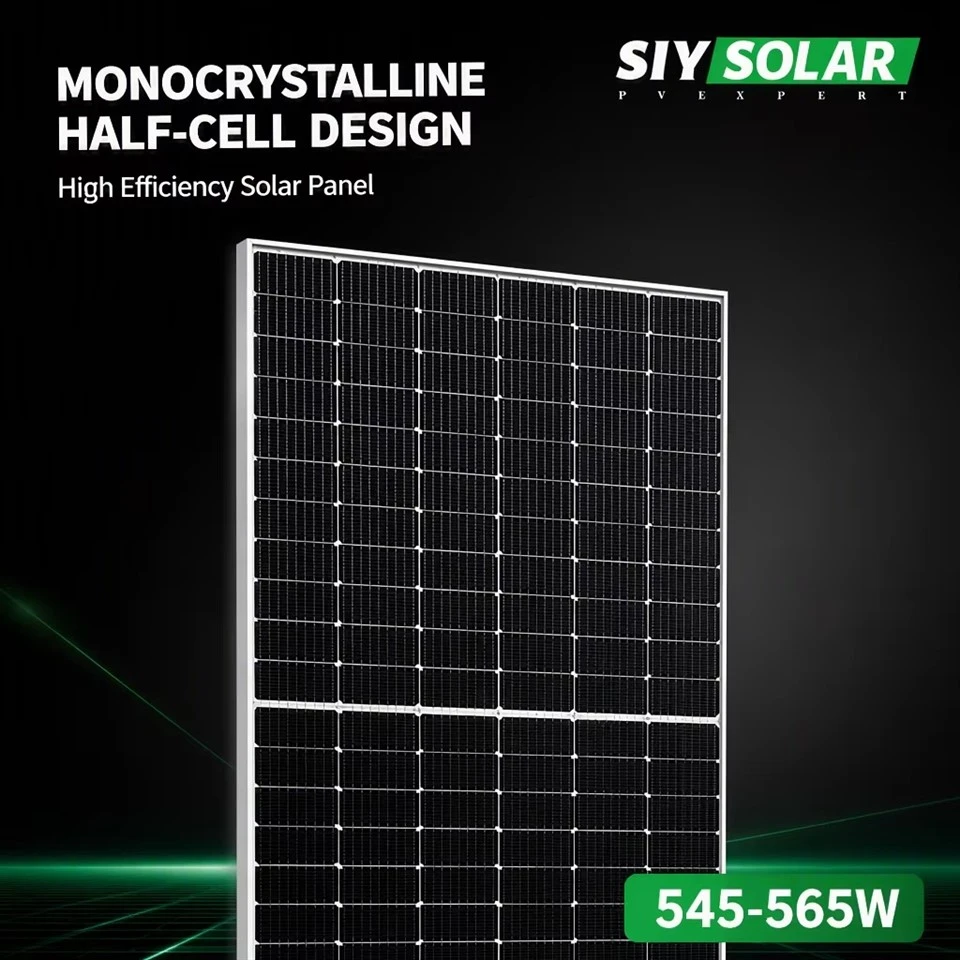
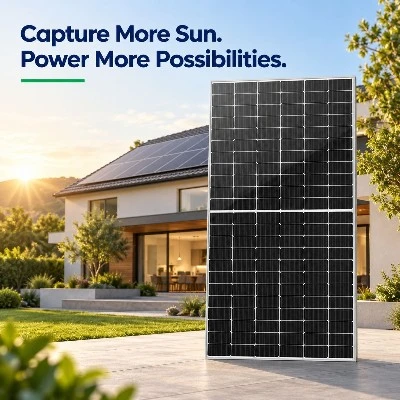
Example solar module from SIY Solar's current 565W–585W product range.
Solar panels are the energy source of the system. They convert sunlight into direct current (DC) electricity, which can supply loads through the inverter and charge the battery when solar production exceeds immediate demand.
The number of panels is determined by daily energy consumption, local solar resource, seasonal weather, roof or ground space and the inverter's PV input limits. A panel's wattage alone does not determine compatibility: voltage and current specifications matter as well.
Key selection parameters
- Total PV capacity (kW): sized to cover expected energy use and recharge the battery in the available solar window.
- Voc and Vmp: verify the maximum string open-circuit voltage under the coldest expected temperature and the operating voltage range.
- Isc and Imp: confirm that the inverter or charge controller can accept the array current.
- Module efficiency and dimensions: important when installation area is limited.
- Mounting conditions: account for wind, snow, corrosion, shading and roof structure.
2. Off-Grid Solar Inverter

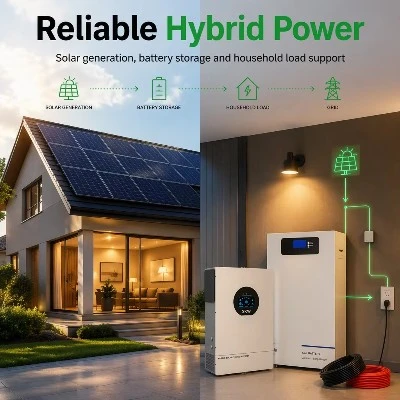
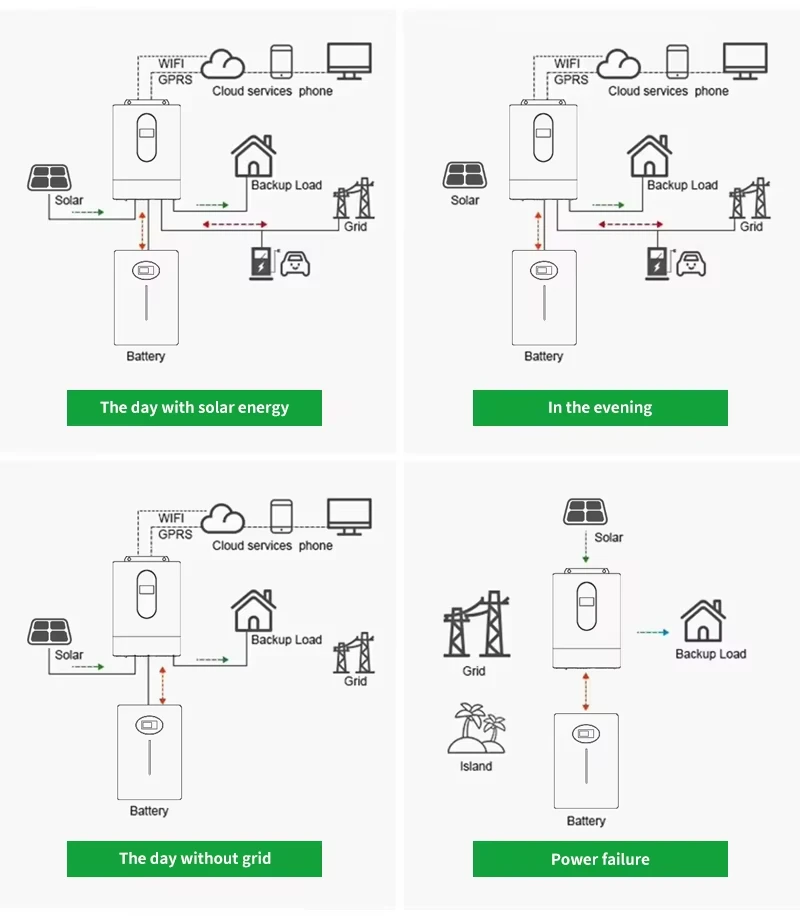
Solar inverter and battery system reference image.
The off-grid inverter converts battery or PV-system DC electricity into AC power for appliances, lighting, pumps, tools and other loads. Many off-grid inverter-chargers also include an MPPT controller, battery charger, generator input or remote monitoring.
Choose the inverter based on both continuous power (kW) and surge power. Motors, pumps, refrigerators and compressors may draw much more power briefly when starting than while running.
Key selection parameters
- Continuous AC output and short-duration surge rating.
- Output voltage and frequency required by the loads.
- Battery nominal voltage and supported battery chemistry.
- Maximum PV input voltage, MPPT operating range and PV input current.
- Generator input or AC charging capability, if needed.
- Protection, cooling, environmental rating and monitoring features.
SIY Solar's current solar inverter category lists on-grid, off-grid and hybrid models, with a reference range of 3kW–12kW for the models presented on that page. Always check the specific model's datasheet rather than assuming every inverter supports every battery or PV configuration.
3. Battery Bank

Battery storage helps power loads when solar production is low or unavailable.
The battery bank stores electricity for night-time use, cloudy periods and short-term changes in demand. In an off-grid system, battery capacity has a major impact on reliability because there may be no utility grid to cover an energy shortfall.
LiFePO4 batteries are widely used for stationary solar storage. SIY Solar's residential battery range references 48V/51.2V configurations, 5–20kWh capacity options, CAN/RS485 communication and parallel expansion on supported models. Confirm the exact battery model and inverter compatibility before ordering.
How to choose a battery
- Usable energy (kWh): the amount of stored energy that can actually be used, not just the nominal capacity.
- Discharge power (kW): must support the expected simultaneous loads and surge requirements.
- Battery chemistry and BMS: confirm protection functions, permitted operating temperatures and approved charging limits.
- Communication: CAN or RS485 may be required for inverter-to-battery coordination.
- Expansion: verify the number of supported parallel units and any configuration limits.
4. Solar Charge Controller
A charge controller regulates the electricity flowing from the solar array into the battery. It helps keep charging within the battery's permitted voltage and current limits.
MPPT controllers adjust the operating point of the PV array to harvest available power under changing sunlight and temperature. Many modern off-grid inverters include an MPPT controller; in that case, a separate controller is usually unnecessary unless the system design calls for one.
| Check | Why it matters |
|---|---|
| Maximum PV open-circuit voltage | Must exceed the calculated worst-case string Voc with the required design margin. |
| MPPT operating voltage | The PV string should operate inside the controller's allowed tracking range. |
| Maximum PV input current/power | Prevents overloading the controller input. |
| Battery chemistry and voltage | Charging profile must match the battery manufacturer's requirements. |
| Temperature compensation or sensor | Follow the battery and controller manufacturer's guidance; requirements differ by chemistry. |
5. Solar Panel Mounting Structure
The mounting structure must suit the installation surface and local environmental loads.
Mounting hardware secures the PV modules to a roof, carport or ground structure. It affects the panel tilt, ventilation, resistance to wind and weather, maintenance access and long-term reliability.
- Roof hooks, rails, clamps and roof-specific flashing where applicable.
- Ground-mounted racks and foundations for ground arrays.
- Corrosion-resistant fasteners and materials appropriate to the environment.
- Structural review for wind, snow, roof loading and local building rules.
- Safe access for inspection, cleaning and maintenance.
Mounting is not a cosmetic accessory. A structurally unsuitable installation can damage modules, the roof or other property.
6. DC/AC Cables, Connectors and Distribution Equipment
Correctly selected wiring carries power between the PV array, controller, battery, inverter and loads. Undersized cables can cause voltage drop, overheating and unnecessary energy losses.
- PV cable and compatible connectors: rated for outdoor exposure, DC voltage, current and site temperature.
- Battery cables: sized for maximum charge/discharge current, cable length and installation conditions.
- AC wiring and distribution board: sized for inverter output and the downstream circuits.
- Terminals, lugs and glands: compatible with conductor size, equipment terminals and enclosure requirements.
- Cable management: UV-resistant ties/conduit and mechanical protection where needed.
Have a qualified installer calculate conductor size and voltage drop using the applicable electrical code and actual installation conditions. Do not choose cable size solely from a generic online chart.
7. Electrical Protection, Isolation and Grounding
Protection equipment helps isolate faults, limit damage and make the system safer to maintain. The exact devices and ratings depend on the system architecture and local electrical code.
| Equipment | Purpose | Design note |
|---|---|---|
| PV DC isolator | Provides a means to isolate PV circuits for service | Must be rated for the DC voltage/current and PV duty. |
| String fuses or DC breakers | Protect circuits where required by the array design | Selection depends on module ratings, parallel strings and applicable code. |
| Battery fuse/breaker and isolator | Protects and isolates the battery circuit | Must suit the battery's maximum current and fault-current characteristics. |
| AC breaker and RCD/GFCI where required | Protects AC circuits and people | Device type and rating must match the inverter and local regulations. |
| Surge protection | Helps protect equipment from transient overvoltage | Coordinate PV, AC and lightning protection based on site risk and code. |
| Grounding and bonding | Provides the required protective electrical path | Follow inverter instructions and local rules for neutral-earth bonding. |
8. Monitoring, Controls and Optional Backup Generator

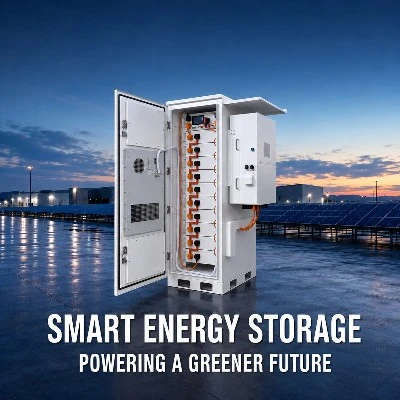
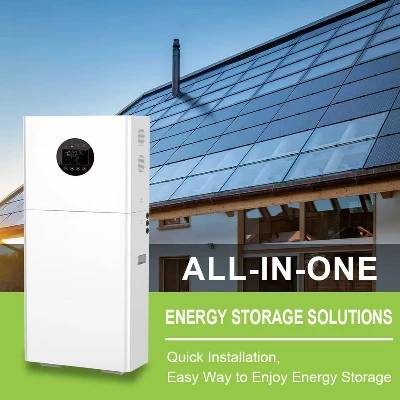
Integrated energy systems may combine conversion, storage and monitoring functions.
Monitoring lets users track PV generation, battery state of charge, energy consumption, alarms and system status. Some inverters provide WiFi or app monitoring, while larger installations may use wired communications and additional energy-management equipment.
A backup generator is optional, but it can be valuable where cloudy periods are long, loads are critical or battery/PV capacity would otherwise need to be oversized. A generator must be compatible with the inverter or charger and connected through correctly designed switching and protection.
Optional items to consider
- WiFi, app or wired monitoring gateway.
- Energy meter and load monitoring for critical circuits.
- Generator input, transfer equipment and interlocks where required.
- Weatherproof equipment enclosures and ventilation.
- Spare fuses, approved connectors and maintenance labels.
How to Size an Off-Grid Solar System
Before buying equipment, estimate how much energy the system must supply and how long it must operate without adequate sunshine. Use real load data where possible instead of relying on the total wattage printed on appliances.
Step 1: Calculate daily energy consumption
For each appliance, multiply its rated power by the number of hours it runs each day, then add the results.
Convert watt-hours to kilowatt-hours by dividing by 1,000.
| Example load | Power | Use per day | Energy per day |
|---|---|---|---|
| LED lighting | 60W total | 5 hours | 300Wh |
| Refrigerator | Average 100W while running* | 10 equivalent hours | 1,000Wh |
| Laptop and router | 100W total | 6 hours | 600Wh |
| Water pump | 500W | 1 hour | 500Wh |
| Illustrative total | 2,400Wh (2.4kWh) | ||
*This is a simplified example, not a prediction for a specific appliance. Refrigerators cycle on and off; motor starting power can be much higher than average running power.
Step 2: Size the battery for usable energy and autonomy
Choose the number of hours or days of stored energy you need. Then account for the battery's permitted depth of discharge, inverter losses, temperature and other system losses. Use the battery manufacturer's specifications and leave an appropriate reserve for critical loads.
Step 3: Size the inverter for power and surge
Add up the loads that may operate at the same time. Check the continuous output rating and the starting surge for motors, pumps, refrigerators and compressors. If several large loads can start together, plan the load schedule or choose equipment designed for the demand.
Step 4: Size the PV array for local solar conditions
Consider the weakest solar season, shading, panel orientation, system losses and the need to run loads while recharging the battery. An array that works well in summer may not fully recharge the battery during a cloudy winter period.
Step 5: Check every electrical interface
Confirm PV string voltage/current, inverter battery voltage, battery charge/discharge limits, output voltage/frequency, grounding method, protective devices and the local installation rules. Components should be selected as one system, not as unrelated products.
Common Off-Grid Solar Equipment Mistakes
Good practice
- Calculate energy use from real appliances and operating hours.
- Check inverter surge power as well as continuous power.
- Match battery voltage, chemistry, BMS protocol and current limits.
- Size PV strings using cold-weather Voc and controller limits.
- Include isolation, overcurrent protection and grounding from the start.
- Plan for seasonal solar variation and battery reserve.
Avoid these mistakes
- Buying panels before checking inverter PV limits.
- Choosing a battery only by nominal kWh.
- Assuming every 48V battery communicates with every inverter.
- Using undersized cables or connectors.
- Ignoring surge loads from motors and compressors.
- Assuming a solar system can supply every load during every season without backup planning.
Example Off-Grid Solar Equipment List
For a small off-grid home or cabin, a typical equipment list may include the items below. This is a planning checklist, not a fixed kit specification; exact quantities and ratings must be engineered for the site.
| Item | Quantity / selection basis |
|---|---|
| Solar panels | Number and total wattage based on daily demand and seasonal solar resource |
| Off-grid inverter | Rated for simultaneous loads, motor surge and required output voltage/frequency |
| Battery bank | Usable capacity based on autonomy target and permitted depth of discharge |
| MPPT charge controller | Only if not integrated into the inverter or required by the design |
| Mounting structure | Roof or ground mounting matched to site and module dimensions |
| PV and battery cables | Correct conductor size, insulation rating, connectors and cable management |
| Protection devices | DC/AC isolation, overcurrent protection, surge protection and grounding as required |
| Monitoring | Inverter display, app or compatible monitoring gateway |
| Optional generator | Consider where extended low-sun periods or critical loads justify backup |
| Installation and commissioning | Qualified installation, testing, labels and handover documentation |
How SIY Solar Can Help
SIY Solar's product portfolio includes solar panels, off-grid and hybrid inverters, energy-storage batteries and integrated solar energy systems. The right combination depends on the target application, daily energy demand, required backup duration, site conditions and destination-market requirements.
When requesting a recommendation, prepare the project location, appliance/load list, daily energy use, required backup hours, output voltage/frequency, available installation area and whether a generator will be used. This information helps the supplier and installer determine a compatible system configuration.
Explore Solar InvertersExplore Storage BatteriesBrowse All Products
Frequently Asked Questions
What equipment is needed for an off-grid solar system?A typical system needs solar panels, an off-grid inverter or inverter-charger, battery storage, mounting hardware, cables and connectors, electrical protection, grounding and monitoring. A separate MPPT charge controller is needed if it is not built into the inverter or required by the design.
Can an off-grid solar system work without batteries?A conventional off-grid system normally needs batteries to supply power when sunlight is weak or unavailable. Specialized direct-use solar applications may work without storage, but they cannot provide dependable night-time power unless another source is available.
How many solar panels do I need for an off-grid system?The number depends on daily energy use, panel wattage, local solar conditions, seasonal weather, system losses and how quickly the battery must recharge. Size the array from the energy requirement and then check the inverter's PV voltage and current limits.
How large should the off-grid battery be?Battery size depends on daily energy use, required autonomy, usable depth of discharge, inverter losses, temperature and reserve requirements. Check both usable energy in kWh and discharge power in kW.
Do I need a separate MPPT charge controller?Not always. Many off-grid inverters have an integrated MPPT controller. If you need a separate unit, ensure that its PV voltage/current limits and charging profile match the solar array and battery.
What protection equipment is required?Depending on the design and local code, the system may need PV string fuses, DC isolators, correctly rated breakers, battery protection, AC circuit protection, surge protection, grounding and bonding. A qualified installer should specify the equipment and verify the final installation.
Can I use an off-grid solar system with a generator?Yes, if the inverter or inverter-charger supports a generator input and the generator, switching, grounding and control arrangement are designed to be compatible. Follow the equipment manuals and local electrical rules.
Planning an Off-Grid Solar System?
Start with your daily energy demand, required autonomy and the appliances that must keep running. Then select the panels, inverter, battery, wiring and protection as one compatible system. For a project-specific equipment list, consult a qualified solar designer or installer.
Visit SIY SolarContact SIY SolarAbout this guide: This article is intended for general equipment-selection education. Product specifications and installation requirements vary by model, location and applicable electrical code. Always use the latest product datasheets and have the final design checked by a qualified professional.
© SIY Solar. All rights reserved.